

In the miniature fluid control industry, brushless motors are the core power source for mainstream equipment, including miniature water pumps and miniature vacuum pumps. Small solenoid valves cooperate with motors to achieve automatic flow regulation. Recently, many equipment purchasers have focused on BLDC performance; therefore, we are launching a serialized popular science article to unpack the core knowledge of this high-efficiency motor.
Understanding the principles and applications of high-efficiency motors: Electric motors convert supplied electrical energy into mechanical energy. Various types of electric motors are widely used. Among them, brushless DC motors (BLDC) are highly efficient and have excellent controllability, and are widely used in many applications. Compared with other types of motors, BLDC motors have energy-saving advantages.
Electric motors are electrical transmission machines.
When engineers face the challenge of designing electrical equipment to perform mechanical tasks, they may consider how electrical signals are converted into energy. Therefore, actuators and motors are among the devices that convert electrical signals into motion. Motors convert electrical energy into mechanical energy.
The simplest electric motor is the brushless DC motor. In this type of motor, current flows through coils placed within a fixed magnetic field. Current generates a magnetic field in the coils; this causes the coil assembly to rotate as each coil is pushed away from its own pole and pulled towards a pole of the fixed magnetic field. To maintain rotation, the current needs to be constantly reversed, causing the coil polarity to continuously reverse, resulting in the coils continuing to "chase" the pole of the opposite magnetic field. The power to the coils is supplied by fixed conductive brushes that contact the rotating commutator; the rotation of the commutator causes the current to flow through the coils in the opposite direction. The commutator and brushes are the key components that distinguish brushed DC motors from other motors.
Figure 1 illustrates the general principle of a brushed DC motor.
Figure 1 illustrates the general principle of a brushed DC motor.
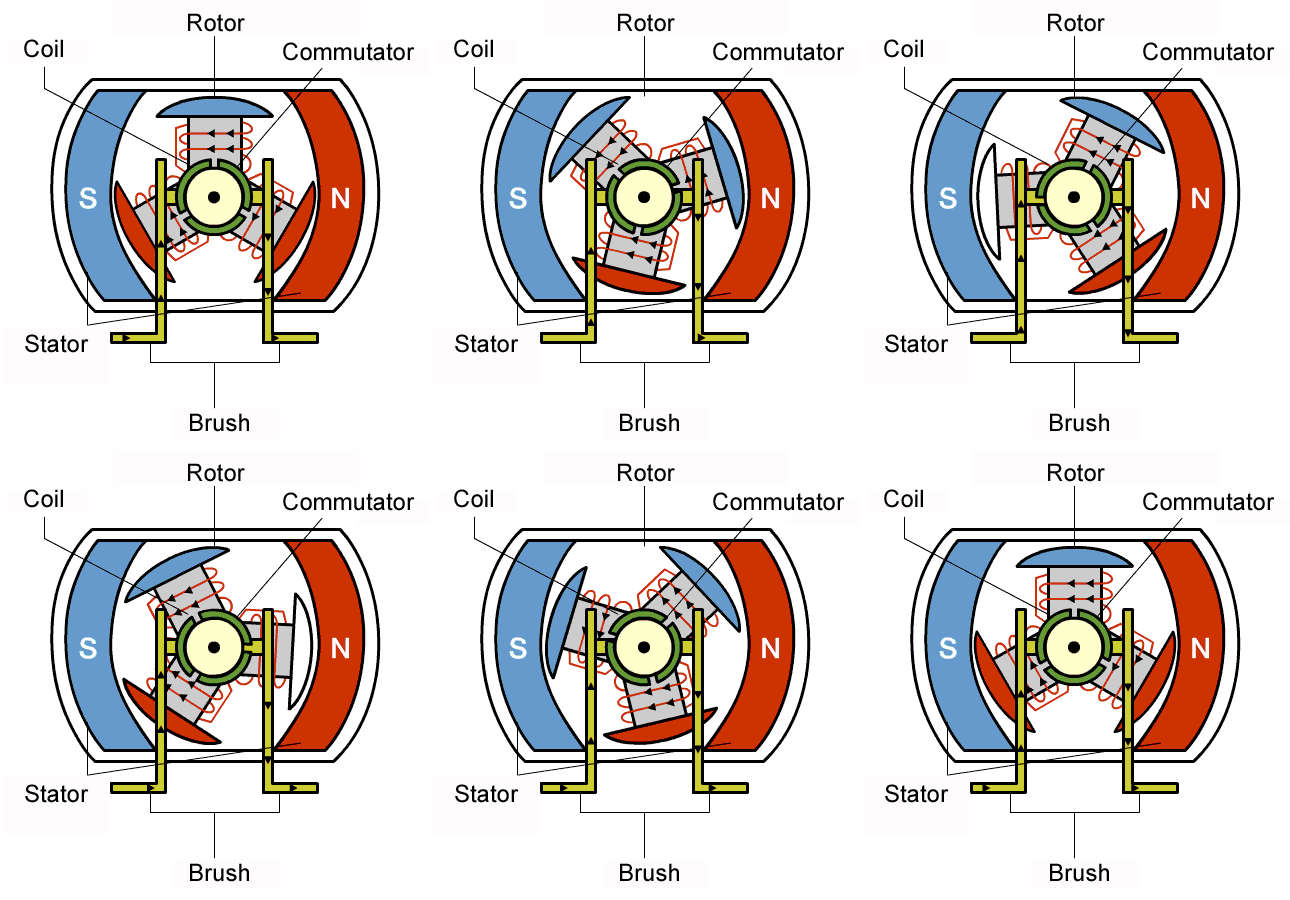
Figure 1: Operation of a brushed DC motor.
The fixed brushes supply electrical energy to the rotating commutator. As the commutator rotates, it continuously reverses the direction of the current flowing to the coils, thus reversing the polarity of the coils and keeping them rotating to the right. The commutator rotates because it is connected to a rotor on which the coils are mounted.
Common Motor Types
Motors differ in their power type (AC or DC) and method of generating rotation (Figure 2). Below, we briefly introduce the characteristics and applications of each type.
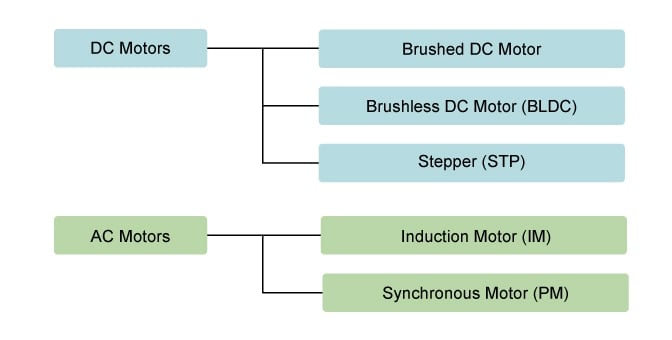
Figure 2: Different Types of Motors
Brushed DC motors are simple in design, easy to control, and widely used for opening and closing disk trays. In automobiles, they are commonly used to retract, extend, and position electric side windows. The low cost of these motors makes them suitable for many applications. However, a drawback is that the brushes and commutator tend to wear relatively quickly due to continuous contact, requiring frequent replacement and regular maintenance.
Stepper motors are driven by pulses; for each pulse received, it rotates by a specific angle (steps). Because the rotation process is entirely controlled by the number of pulses received, these motors are widely used for position adjustment. They are often used to control the paper feed process in fax machines and printers—because these devices feed paper in fixed steps, and these steps are easily correlated with the pulse count. Pause control is also easy to implement, as the motor rotation stops immediately when the pulse signal is interrupted.
When using synchronous motors, rotation is synchronized with the frequency of the power supply current. These motors are commonly used to drive the rotating trays in microwave ovens; the reduction gears in the motor unit provide the appropriate rotational speed to heat food. Induction motors, the rotational speed varies with frequency, but the movements are asynchronous. In the past, these motors were commonly used in electric fans and washing machines.
There are various types of motors commonly used; in this section, we'll look at the advantages and applications of brushless DC motors.
Why do BLDC motors rotate?
As the name suggests, brushless DC motors do not use brushes. In brushed motors, brushes transfer current to coils on the rotor via a commutator. So, how does a brushless motor transfer current to the rotor coils? None—because the coils are not located on the rotor. The rotor is a permanent magnet; the coils do not rotate but are fixed to the stator. Because the coils do not move, brushes and a commutator are not needed. (See Figure 3) In brushed motors, rotation is achieved by controlling the magnetic field generated by the coils on the rotor, while the magnetic field generated by the stationary magnet remains constant. To change the rotational speed, the voltage across the coils needs to be changed. In a BLDC motor, the permanent magnet rotates; rotation is achieved by changing the direction of the electromagnetic field generated by the surrounding stationary coils. To control rotation, the magnitude and direction of the current flowing into these coils need to be adjusted.
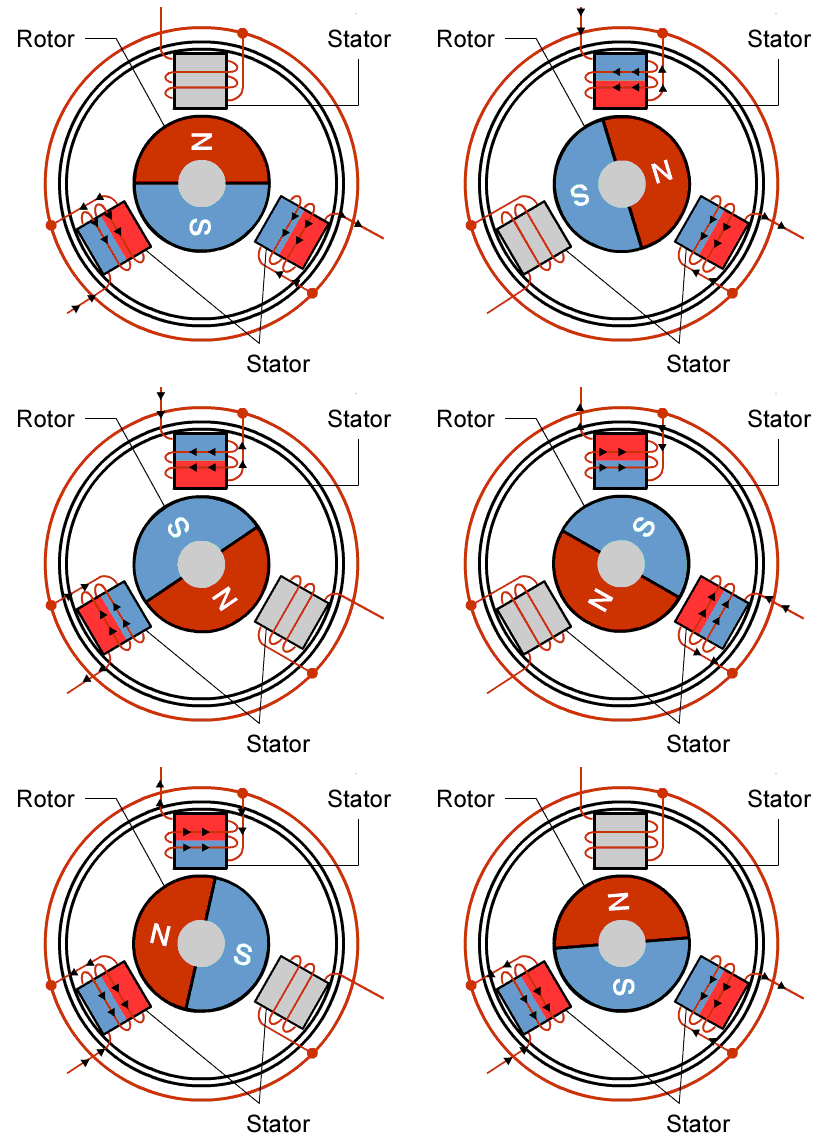
Figure 3: BLDC Motor.
Since the rotor is a permanent magnet, it does not require current, thus eliminating the need for brushes and commutators. The current to the stationary coils is controlled externally.
Advantages of BLDC Motors
A BLDC motor with three coils on the stator will have six wires (two for each coil) extending from these coils. In most implementations, three of these wires will be internally connected, with the remaining three extending from the motor body (in contrast to the two wires of the brushed motor described earlier). Wiring within the casing of a BLDC motor is more complex than simply connecting the positive and negative terminals of a power supply unit; we will examine the workings of these motors in more detail in Part II of this series. Below, we conclude by understanding the advantages of BLDC motors.
A significant advantage is efficiency, as these motors can operate continuously at maximum torque. In contrast, brushed motors can only reach maximum torque at certain points of rotation. To provide the same torque as a brushless motor, brushed motors require larger magnets. This is why even small BLDC motors can deliver considerable power.
The second major advantage related to the first is controllability. BLDC motors can be controlled via feedback mechanisms, precisely delivering the required torque and speed. Precise control, in turn, reduces energy consumption and heat generation, and—in cases where the motor is battery-powered—extends battery life.
Because there are no brushes, BLDC motors also offer high durability and low electrical noise generation. With brushed motors, the brushes and commutator wear down due to continuous moving contact, generating sparks at the contact points. Electrical noise, in particular, results from the strong sparks easily generated as the brushes pass through the commutator gap. This is why BLDC motors are generally considered a better choice in applications where electrical noise must be avoided.
Ideal Applications of BLDC Motors
We have seen that BLDC motors offer high efficiency and controllability, and they have a long operating life. So what are their uses? Due to their efficiency and lifespan, they are widely used in continuously operating equipment. They have long been used in washing machines, air conditioners, and other consumer electronics; more recently, they have also appeared in fans, where their high efficiency significantly reduces power consumption.
They are also used to drive vacuum machines. In one case, a change in the control program resulted in a dramatic jump in speed—an example of the high level of controllability these motors offer.
BLDC motors are also used to drive hard disk drives; their durability allows the drives to operate reliably for extended periods, while their power efficiency helps reduce energy consumption in an increasingly important sector.
Towards Wider Future Applications
We can expect that in the future, BLDC motors will be widely used in a wider range of applications. For example, they may be widely used to drive service robots—small robots that provide services in sectors outside of manufacturing. One might think that stepper motors are better suited for this type of application, as pulses can be used for precise positioning control. However, BLDC motors are better suited for controlling force. Using stepper motors, maintaining the position of structures such as robot arms requires relatively large and continuous current. With BLDC motors, the required current is proportional to the external force, resulting in more energy-efficient control. BLDC motors may also replace simple brushed DC motors in golf carts and mobile vehicles. In addition to higher efficiency, BLDC motors offer more precise control – which in turn can further extend battery life.
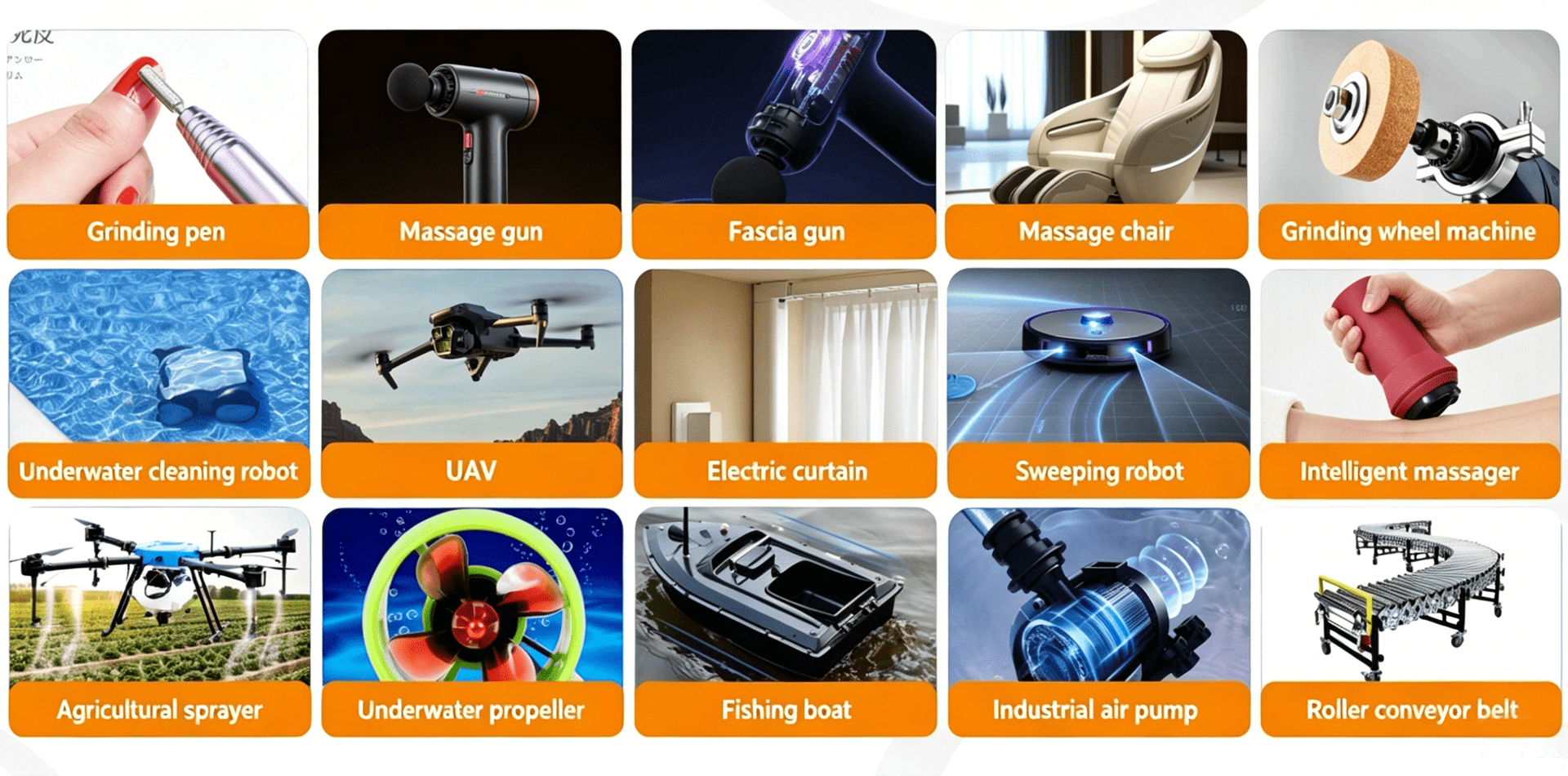
BLDC motors are also ideal for drones. Their ability to provide precise control makes them particularly suitable for multi-rotor drones, allowing for precise control of the drone's attitude by controlling the rotational speed of each rotor.
